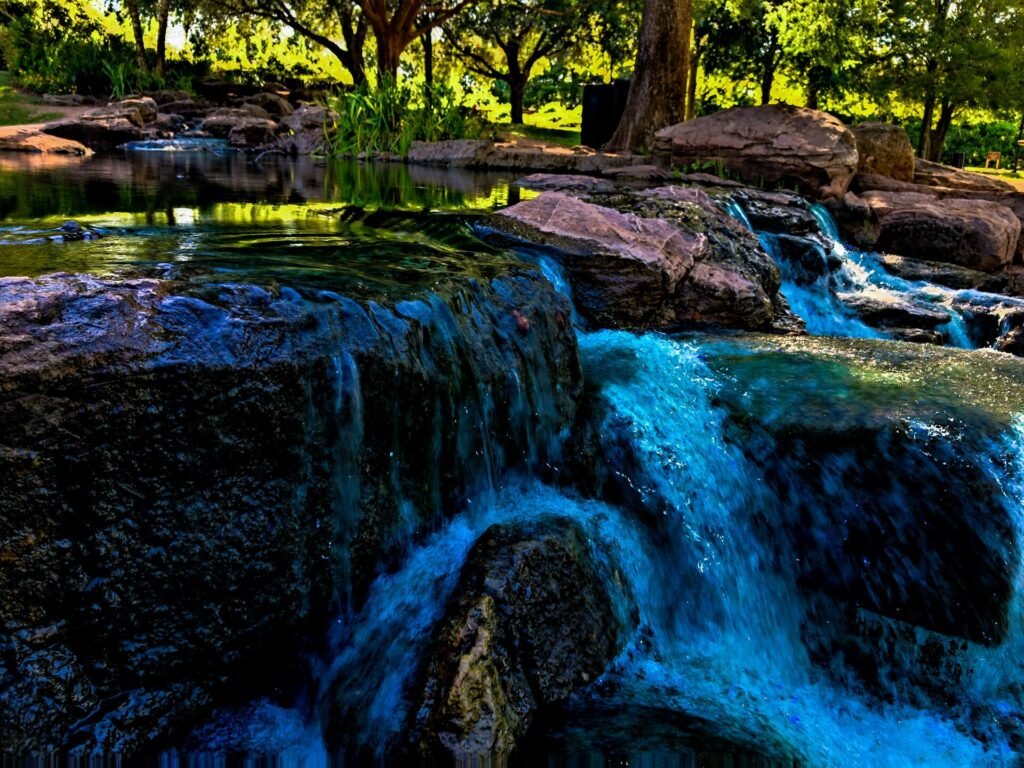
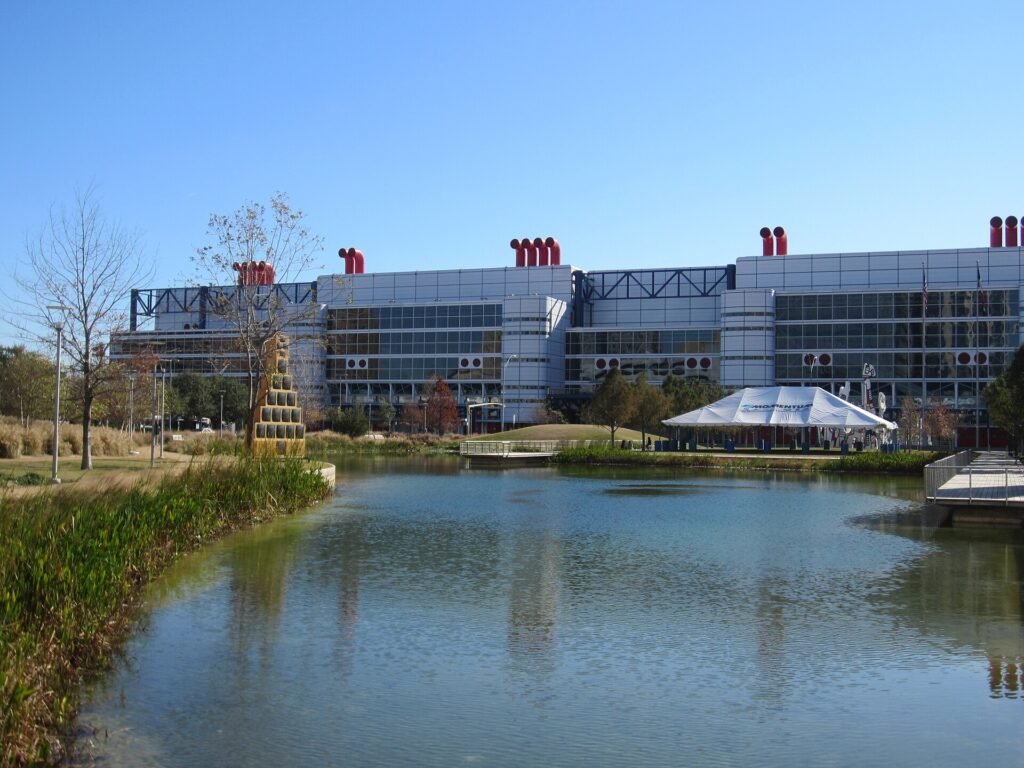
Cover: Discovery Green lake and convention center in January 2012 (2012). Photo: Another Believer. CC BY-SA 3.0. Photo source · License
Discovery Green in Houston works well as the center of a small plan. You do not need a major festival or an all-day itinerary to make a visit worthwhile. Choose whether you want to walk, look at art, or simply pause outdoors, then let that decision guide the time you spend in the park.
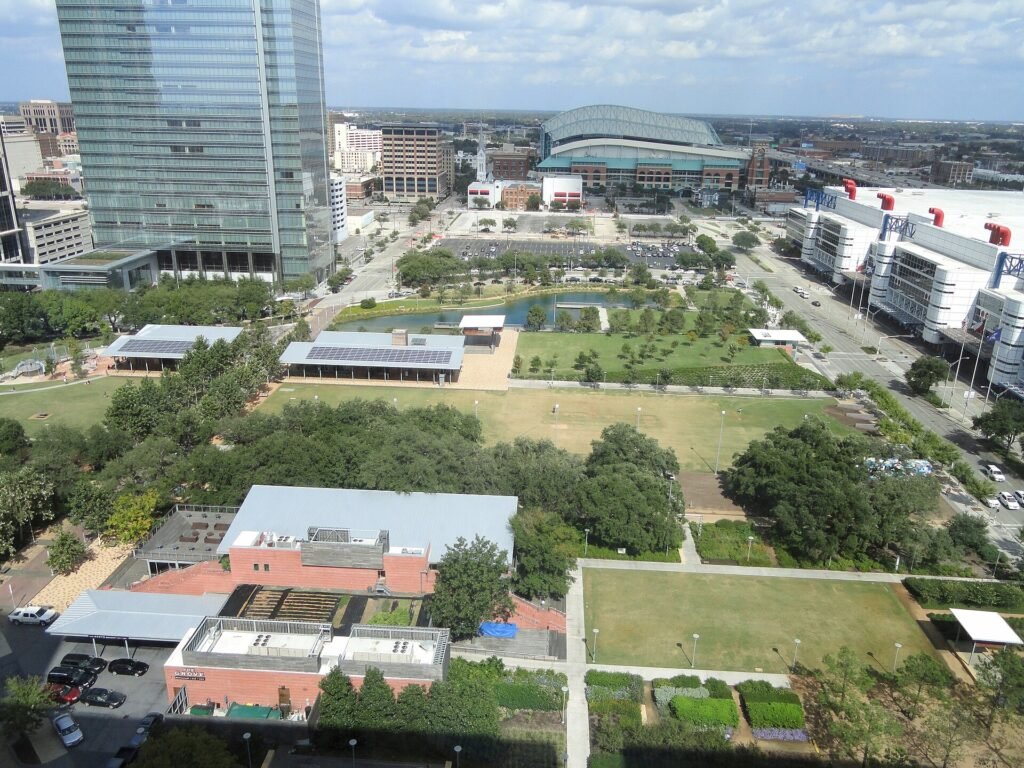
The park’s official attractions directory lists Kinder Lake, gardens, recreation features, and artworks including Synchronicity of Color and Monument Au Fantome. Discovery Green is at 1500 McKinney Street. That combination gives you several possible outings within the same destination, but individual features and scheduled activities should be checked before your visit.
Pick an activity, then add one extra
Start with a single priority. If you want to see art, choose two pieces from the directory and locate them before you arrive. If you mainly want an outdoor break, make a short walk near the lake your starting idea. Avoid promising your group that every play or water feature will be operating.
Three ways to give the visit a shape
The park’s attractions directory gives you more to work with than an open lawn. Kinder Lake, the Hagstette Family Putting Green, Trini’s Shuffleboard Court, and the Carruth Foundation Bocce Courts suggest different kinds of breaks. Check the individual attraction’s access and equipment information before promising a game; a listed court is not confirmation that everything needed will be available when you arrive.
For a conversation break, make a lakeside pause the main event and add one art stop. For a playful visit, choose one game and let everyone understand the rules before deciding whether to try another. For a solo visit, bring a sketchbook or use the gardens as a short exercise in noticing color and texture. Each is a complete plan without a ticketed event.
Set the return point at the beginning. If you are meeting someone during a workday, name a particular attraction rather than simply saying “the park.” A clear meeting place helps preserve the useful part of a short visit: spending the available time together.
An optional second activity keeps the plan pleasant without making it rigid. A garden stop can follow an art walk. A few photographs can follow a quiet pause. When the first activity feels complete, decide together whether to continue. Finishing early is perfectly reasonable when this is one part of a downtown day.
Look at public art without making it homework
Try describing an artwork before reading its title. What do you notice first: scale, shape, material, or color? Then read the available information and see whether it changes your impression. This gives companions something concrete to talk about, even if nobody has studied art.
Try the Listening Vessels, then look for color
Doug Hollis’s Listening Vessels use the curved interiors of two limestone forms to focus sound. The park explains that a soft voice can travel from one vessel to the other. This makes a good shared experiment: take turns speaking softly and listening, then compare the experience with an ordinary conversation outside the forms. Let other visitors have a turn rather than treating the installation as reserved seating.
For a different visual experience, the park identifies Margo Sawyer’s Synchronicity of Color near Avenida de las Americas and the Brown Promenade. The familiar colored boxes connect art with the park’s built infrastructure. Look at where one color ends, how projecting shapes catch light, and how your view changes as you move.
The contrast between these two stops is useful: one asks you to listen, while the other rewards looking. If time is limited, choose one and give it real attention. A short encounter with a named artwork is more memorable than passing several without learning what they are.

Take photographs from public access points and give other visitors room to move. A photograph of the whole setting can be more useful than a close crop if you want to remember how an artwork relates to the surrounding streets and open space. Follow any posted directions about approaching or interacting with a piece.
Keep event planning separate from everyday access
A park can be open while a particular class, performance, rental, or seasonal attraction follows a different schedule. Use the current organizer listing for anything that requires a start time or registration. An old social-media photograph is not confirmation that the same activity is available on the day you choose.
Before leaving, check transportation and the return trip as carefully as the activity itself. Save your parking location or transit stop, keep the route manageable, and consider what happens if the weather changes. A simple backup such as shortening the visit is often easier than trying to replace the entire afternoon.
A downtown park visit has two calendars
Discovery Green’s general park listing gives the address as 1500 McKinney Street and daily hours of 6 a.m. to 11 p.m. Individual attractions and scheduled programs can follow different arrangements. Use the official attraction pages for ordinary activities and the current calendar for a concert, class, or special installation. Neither should be substituted for the other.
If you plan around an event, save its start time, the precise gathering location, and any registration confirmation together. Work backward from that commitment when arranging parking or a drop-off. If you only want a casual break, keep the plan flexible enough to move to another part of the park when an area is being used for a program.
Make a return-to-downtown note afterward: was the visit an easy addition to something you already do, or did it need a separate trip? That distinction matters more than the sheer number of attractions nearby. Someone who enjoys a brief midday pause may want a very different routine from someone who mainly returns for evening performances. Both can use the park well without following the same itinerary.
Choose your downtown break
Art first: pick two works from the official directory. Outdoors first: choose a short walk and a place to pause. Event first: verify the exact organizer listing, then leave a little unplanned park time before or after it.
Notice what downtown access means to you
If you are exploring Houston neighborhoods and local life, pay attention to the experience from your actual starting point. How did the trip fit your day? Would you make it regularly? Would you enjoy visiting at a different time? These questions are more useful than assuming that a familiar destination feels equally convenient from every address.
Save those observations with your home-search notes. The Aurhomes Group home buyer guide can help you turn broad lifestyle preferences into specific questions about a property, its location, and the way you would use it.